

- Home
- Investors Centre
- Sustainability
- Talent
- News
- Insights
- TH!NK
- Corporate Governance
- Who we are
- Board of Directors
- Community
- MCB Offices
Contact Info
Turning water risk into strategy: insights from the “Eau, Climat et Avenir : Agir Maintenant” workshop
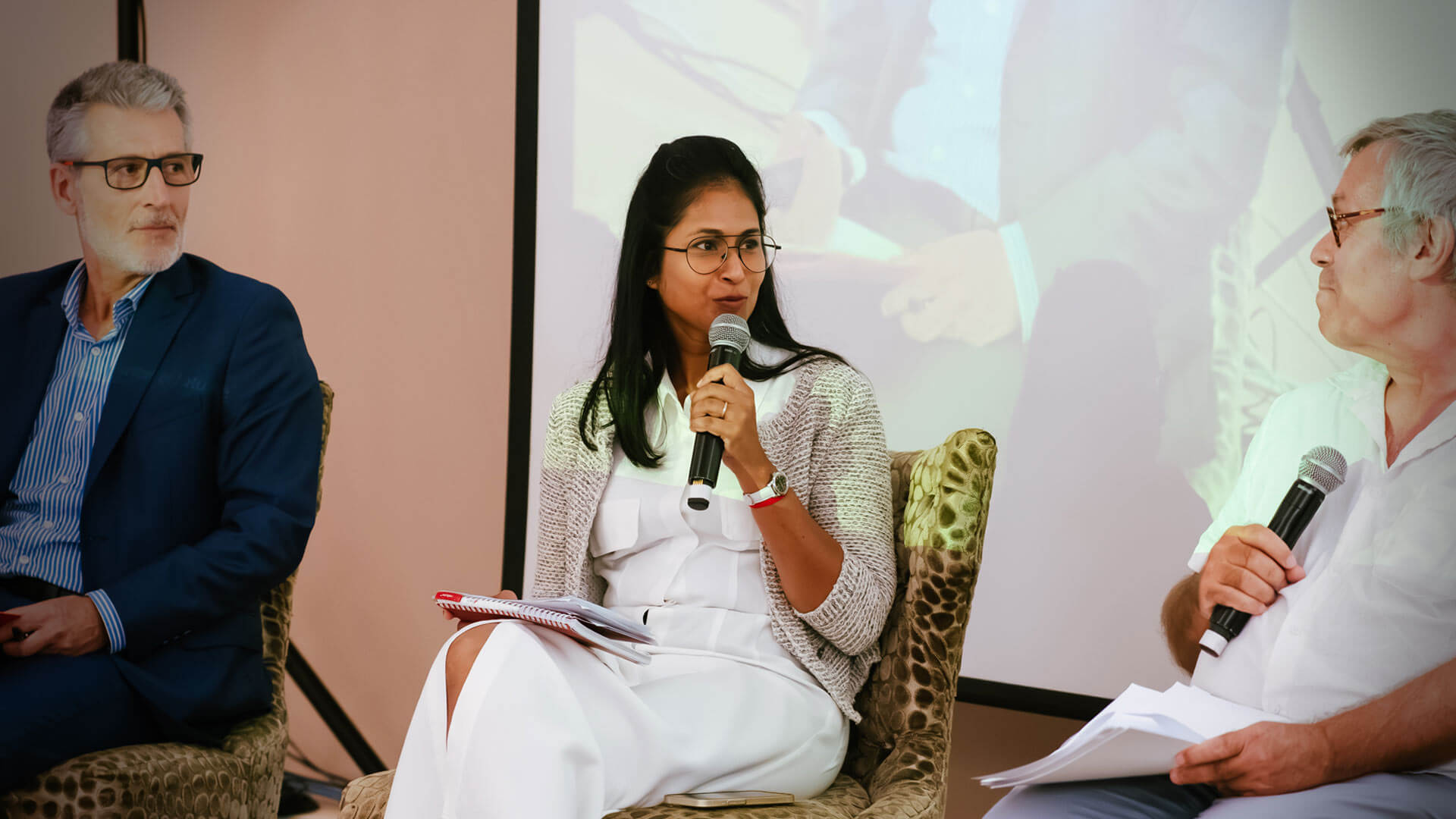
Water security is emerging as one of the most pressing strategic issues for island economies. Rising climate variability, growing demand and increasing exposure to extreme events are reshaping the way businesses, public institutions and financial actors assess risk and plan for the future. These themes were central to the workshop “Gestion des risques liés à l’eau et intégration stratégique,” (Water risk management and strategic integration) where MCB’s Sustainability Lead, Dina Ramgobeen-Gukool, contributed to the discussions.
The workshop examined how water-related risks, including droughts, flooding, quality degradation and pressure on rivers and lagoons, translate into operational, financial and reputational vulnerabilities. Participants highlighted the need to move from reactive management to structured and long-term risk integration.

These themes strongly reflect MCB’s strategic approach to address sustainability-related risks and transforming potential impacts into opportunities, thereby supporting its clients and the nation in building a resilient future. MCB has developed its Sustainable Finance Framework that is aligned with international principles such as the ICMA Green and Social Bond Guidelines and the LMA Loan Principles. The framework sets out clear green and social taxonomies with distinct categories including water and wastewater management, pollution prevention, climate adaptation and resource efficiency. These categories form part of the eligibility criteria to evaluating sustainable financing opportunities.
During the session, Dina highlighted the role of ESG considerations and provided an overview of the climate risk assessment process at MCB. She also explained how MCB’s internal project evaluation and selection processes ensure that environmental and social risks, including water-related vulnerabilities, are systematically considered. Dina further elaborated on the robust internal processes for project evaluation and selection.
As Mauritius and the region face growing water-related constraints, the ability to anticipate, evaluate and manage water-related risks will be essential to safeguarding economic resilience. Workshops of this kind support a shared understanding across sectors and encourage practical collaboration to build long-term water security.
🔗 Read more in our Sustainability Report 2025


Recent Articles
.webp?sfvrsn=91532dc8_1)

TH!NK
.webp?sfvrsn=60d1e308_1)

Subscribe to our Email Alerts
Stay up-to-date with our latest releases delivered straight to your inbox.
Contact
Don't hesitate to contact us for additional info
Email alerts
Keep abreast of our financial updates.