

- Home
- Investors Centre
- Sustainability
- Talent
- News
- Insights
- TH!NK
- Corporate Governance
- Company Profile
- Board of Directors
- Community
- MCB Offices
Contact Info
MCB CEO calls for public-private partnership to aid growth
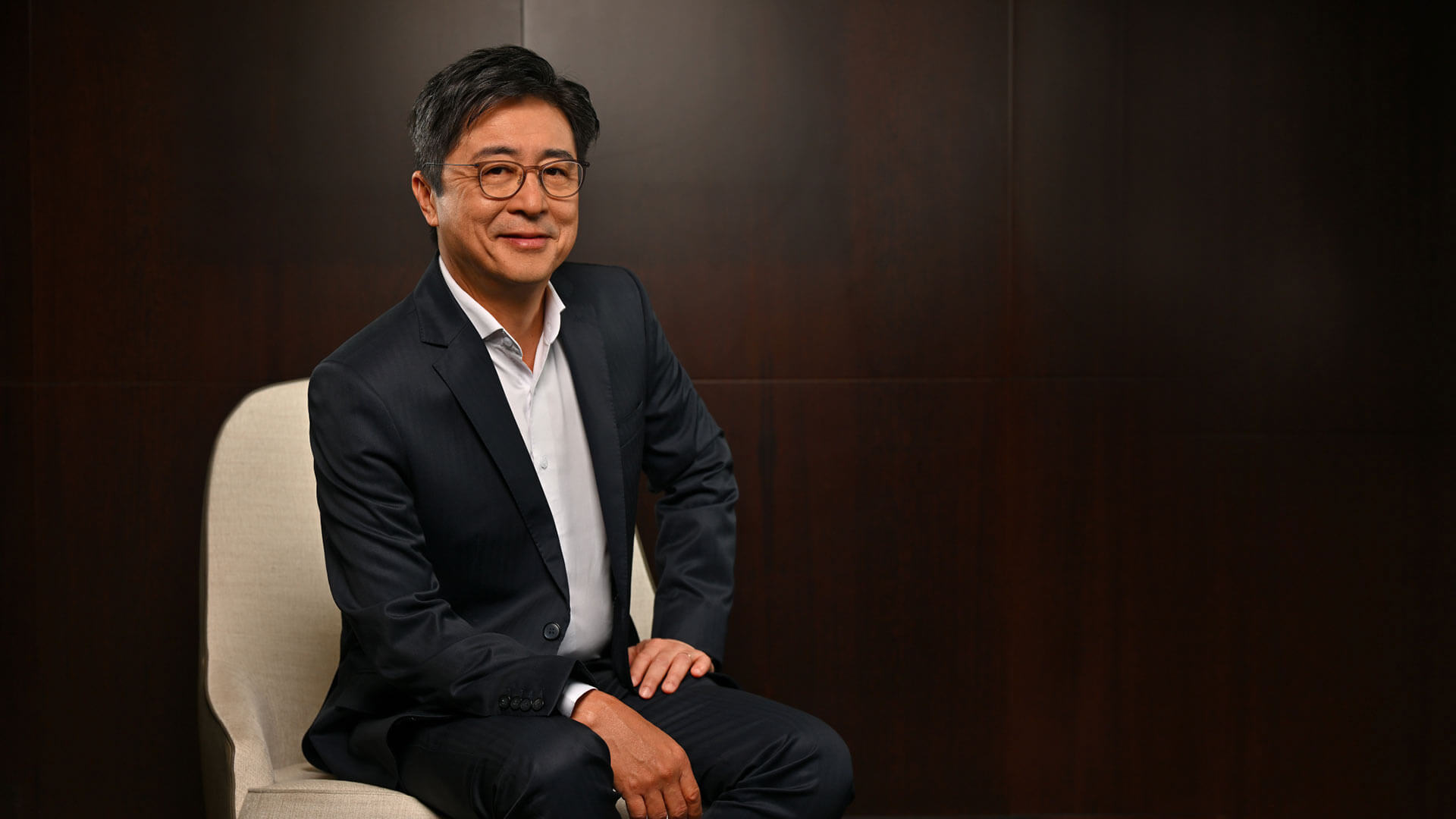
“It’s time to regenerate a new cycle of significant growth like we’ve seen in the 1990s and the 2000s”, Jean Michel Ng Tseung, the CEO of MCB Group, said in the latest episode of the MCB Talk podcast series, entitled “Behind the billions”.
Recalling the country’s consistent economic growth during those two periods, Mr Ng Tseung said a new growth cycle would see Mauritius break the middle-income trap and aim for a GDP per capita of USD15,000.
He says he firmly believes in the collaboration between the public and private sectors, together with the banks. He adds that the proven Public-Private Partnership (PPP) model, successfully used to develop the first wave of Independent Power Producers (IPPs), can be used to support Renewable Energy projects, the Circular Economy, and the national digital infrastructure the country will need in the future.
The MCB CEO believes that sectors such as the blue economy, encompassing sustainable fisheries, port and marine logistics and marine biotechnology, as well as developments in digital assets, have great potential.
Maintaining the investment-grade status
The Group CEO emphasises that preserving Mauritius’ and MCB's investment-grade rating, as well as remaining on the FATF whitelist, is essential for the bank's and the country's continued growth.
Acknowledging that the government is doing “everything in its power” to prevent a sovereign downgrade, Mr Ng Tseung voices concern over the country’s high public debt, which he notes is being closely monitored by the government.
The MCB CEO also notes that the current geopolitical tensions could significantly affect our key source markets in Europe. These markets are currently grappling with high debts and a stagnating economic situation, not helped by the war in Ukraine.
Africa, a different story
Mr Ng Tseung cautions that the heightened global volatility could lead to a decline in foreign direct investment (FDI) and disruptions to our supply chain. These challenges may trigger inflation, a higher cost of living, and negatively impact the rupee's competitiveness, ultimately slowing down growth.
He believes, however, that the global situation will not significantly impact Africa and MCB’s business on the continent, noting that the continent's large deposits of critical minerals and rare earths make it more resilient. He adds that MCB will work at better positioning itself in this strategic area, going forward.
Domestic banking activities generate 26% of group profits
Jean-Michel Ng Tseung explained that although only 26% of the group’s profits came from banking operations in Mauritius, this does not mean a slowdown in activities. Instead, it highlights the rising cost of doing business locally. Key factors include a notable rise in salary levels for the Group’s 5,000 employees, as well as an accelerating increase in technology costs aimed at strengthening cybersecurity and cloudifying the bank’s infrastructure, among other strategic initiatives. He also revealed that MCB increased its prime lending rate more slowly than its savings rate in the context of the change in the Key Rate by the Central Bank, adversely impacting the bank’s profits locally.
MCB’s Strong Economic Contribution: Rs5 Billion in Taxes and Value Creation, representing 5% of GDP
MCB has contributed Rs5 billion in taxes to the country’s economy, representing 14% of the total corporate taxes paid in Mauritius. Mr Ng Tseung noted that the effective tax rate for the financial year 2024-2025 was 21%, compared to 11% a few years ago, and that it will increase to 29% in 2025-2026. He also explains that the numbers are very high compared to what is practised in other jurisdictions, a measure of how meaningfully MCB is contributing to the country's finances.
He adds that the value created by the group amounts to approximately Rs40 billion, representing 5% of Mauritius' GDP. 22% of that value went to the more than 5,000 employees of the group, 14% went to the community through the authorities by way of taxes, 16% went to the 22,000 shareholders of the MCB, while 17% went to the more than 1000 suppliers, of which 75% are local. The 31% remaining is being used to support the company’s growth.
Strong Governance, Not Complacency
While MCB is a systemic bank, it does not operate under any sense of complacency. The Group CEO emphasised that the bank’s greatest strength lies in its robust governance framework. He explained that the board, its committees and the executive forums maintain the rigorous checks and balances to minimise risks “to the fullest extent possible”, whether financial (credit, funding, liquidity, capital) or non-financial (cyber, AML/ CFT, fraud, ethics) risks.
Commitment Beyond Trends
Asked about MCB’s position now that there’s a global backlash against sustainability, the group CEO reaffirmed that MCB has no intention of reneging on its commitments. “We are an independent bank; we do what we think is right,” he said, adding that climate change is a reality. Every year, he says, droughts impact agriculture, flash floods damage infrastructure, and beach erosion threatens our tourism industry. Loss of biodiversity continues to impact our environment and ecosystem and, indirectly, our economy, he added.
Mr Ng Tseung says MCB’s decision to stop financing coal exemplifies this commitment to sustainable development, adding that Rs 10 billion has been allocated to fund projects in renewables, energy efficiency, green transportation, water, and waste management.
On the African continent, MCB supports clients in their just transition by financing renewable energy projects, as well as the trade and extraction of critical minerals for batteries and Photovoltaic systems, among other initiatives.


Recent Articles


TH!NK


Subscribe to our Email Alerts
Stay up-to-date with our latest releases delivered straight to your inbox.
Contact
Don't hesitate to contact us for additional info
Email alerts
Keep abreast of our financial updates.